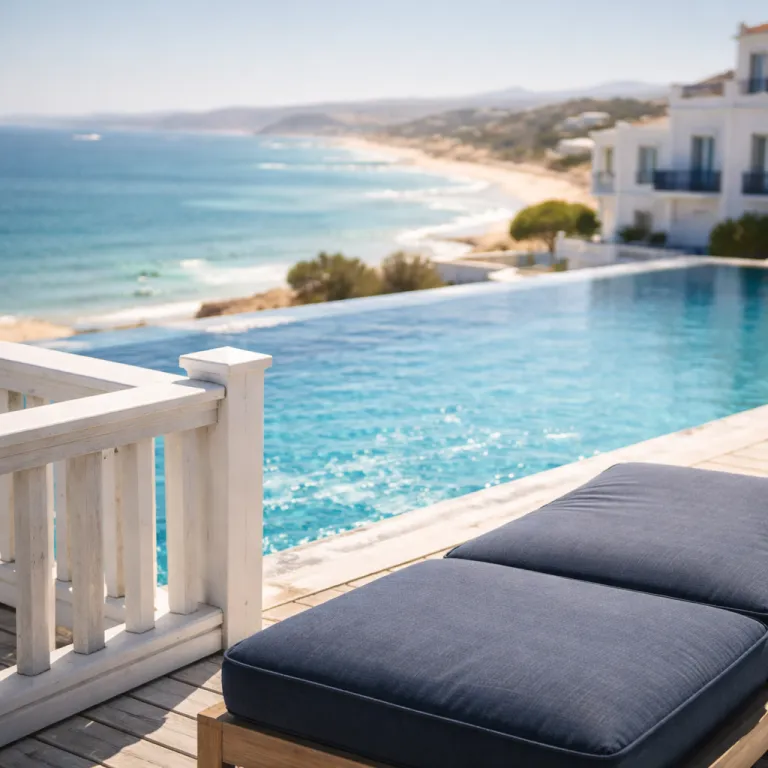
Why the Faro district works as a base
Landing at Faro Airport and staying put in the Faro district is not a compromise; it is a strategy. The city sits at the hinge of the Algarve, with the wild west coast on one side and the classic golden beaches on the other, yet it keeps a slower, more local rhythm than the big resort towns. For travellers who want luxury without the circus, this balance matters.
In Faro city itself, hotels cluster around three main zones: the marina and waterfront, the Cidade Velha inside the old walls, and the quieter residential streets north of Avenida 5 de Outubro. Marina-facing properties suit those who want to walk to the ferry for the Ria Formosa islands, while stays in the old town trade some car access and parking ease for atmosphere – cobbled lanes, church bells, tiled façades. A few minutes’ drive away, inland estates and restored casas offer more space, gardens, and often a larger outdoor pool.
Compared with staying in Albufeira or Vilamoura, the Faro district is better for travellers who value access to nature reserves, day trips and a sense of real Portugal over a dense strip of bars. You will not step out of your Faro hotel directly onto Faro Beach; instead, you take a short taxi or drive across the causeway to Praia de Faro, or a boat across the lagoon to quieter sandbanks. For many, that small effort is a welcome filter that keeps the coastline gentler and less built up.
| Base in Faro district | Best for | Typical transfer time* |
|---|---|---|
| Faro old town / marina | Short breaks, car-free stays | 10–15 minutes by taxi |
| Praia de Faro | Beachfront mornings, relaxed evenings | 5–10 minutes by taxi |
| Inland countryside | Space, pools, quiet | 15–25 minutes by car |
*Transfer times are approximate, based on data from Faro Airport, regional tourism information and typical fares quoted by local taxi services.
Understanding Faro city: neighbourhoods and hotel styles
On Rua de Santo António, the city’s main pedestrian artery, you feel immediately how compact Faro is. From here, most central hotels are within a 10-minute walk, whether you choose a discreet address near Igreja do Carmo or a contemporary property overlooking the marina. The choice is less about distance and more about mood: urban, historic, or lagoon-facing.
Staying inside the Cidade Velha means sleeping within medieval walls, often in converted townhouses or former merchants’ casas. Rooms tend to be characterful rather than vast, with stone staircases, original tiles and, sometimes, small internal courtyards instead of a large pool. It suits couples and solo travellers who want to wander to dinner in the old streets and hear the echo of church choirs from Sé Cathedral rather than the hum of traffic.
Around Igreja do Carmo, with its famous bone chapel, the streets feel more residential. Here you find a mix of small luxury hotels and simple guesthouses, often with easier access to free or paid parking in nearby streets. Closer to the marina and Jardim Manuel Bívar, larger properties lean into business and short-stay city breaks, with more rooms, structured breakfast buffets and, in some cases, an outdoor pool on a rooftop terrace. If you plan to take early ferries into the Ria Formosa or late flights, this waterfront zone is practical.
- Budget example: guesthouses around Rua de Santo António often offer compact rooms from roughly €60–€90 per night in low season, rising in summer.
- Mid-range example: modern city hotels near the marina typically start around €100–€150 per night, with breakfast and small rooftop pools.
- Premium example: boutique properties inside the old town walls can range from about €180–€300 per night for suites with terraces and lagoon views.
Beach, lagoon or countryside: choosing your setting
Praia de Faro stretches along a narrow sandbar, reached by a low bridge about 9 km from the city centre. Hotels here are limited; the strip is mostly low-rise houses, cafés and a few small guest accommodations. Staying on the beach gives you sunrise walks and sunset drinks over the Ria Formosa, but you trade immediate access to the city’s restaurants and cultural sites. In high season, parking along the beach road can be tight, so check whether your chosen hotel offers any form of reserved or free parking nearby.
Within Faro city, you are not on the ocean but on the lagoon. Properties facing the Ria Formosa nature park offer a different kind of water view: salt marshes, birdlife, shifting light rather than crashing waves. From these hotels, it is easy to join boat trips to the islands, stop at a simple beach club on Ilha Deserta, or spend a day on the long sands of Ilha de Faro. For travellers who like to combine nature and gastronomy, this lagoon setting is often the best compromise.
Drive 15 to 25 minutes inland and the mood changes again. Here, in the wider Faro district, rural casas and small luxury hotels sit among orange groves and low hills. You gain space, gardens, and often both an outdoor pool and, in some higher-end properties, a compact indoor pool or spa area. You lose the ability to stroll into town, so this suits guests who are comfortable renting a car and using the city – and Faro Portugal’s airport – as a gateway rather than a daily destination.
- Beachfront stays: ideal if you want to step onto the sand, accept limited nightlife and rely on taxis or a hire car.
- Lagoon-view hotels: best for Ria Formosa boat tours, birdwatching and easy access to Faro’s restaurants.
- Countryside retreats: suited to longer holidays focused on pools, gardens and quiet evenings under the stars.
What to expect from luxury and premium hotels in Faro district
In the Faro district, luxury rarely shouts. Even the most polished hotels tend to favour whitewashed walls, local stone and a restrained palette over ostentatious design. Expect rooms that prioritise comfort – good mattresses, blackout curtains, quiet air conditioning – with a mix of classic and contemporary furniture. Suites may add separate living areas, terraces, or direct pool access, but the overall feel remains more Mediterranean retreat than urban palace.
Breakfast is usually a highlight rather than an afterthought. Many higher-end properties serve it in light-filled dining rooms or on shaded patios, with fresh fruit, local cheeses, cured meats and still-warm bread. Some will add regional touches such as fig jam or carob cake. If breakfast is important to you, check whether it is included or optional, and whether early departures can be accommodated with a lighter option.
Facilities vary more than you might expect. Some central Faro hotels focus on sleek rooms and a rooftop bar, with only a plunge pool or no pool at all, relying on easy access to the beach and Ria Formosa instead. Others, especially in the outskirts of the city or in the wider district, invest in larger outdoor pools, landscaped gardens and small wellness areas. When comparing hotel deals, look closely at the trade-off between location and amenities rather than assuming all luxury hotels offer the same set of facilities.
- Typical premium extras: airport transfers on request, concierge support for Ria Formosa tours, and late check-out subject to availability.
- Indicative rates: four- and five-star hotels in peak summer often range from about €160–€350 per night, depending on view, room size and flexibility.
- Good to know: many properties offer lower shoulder-season prices in April–May and October while keeping most facilities open.
Practical details: pools, parking, pet policies and availability
Parking is the quiet stress point of many Faro stays. In the tight grid around the marina and old town, on-street spaces fill quickly, and underground car parks can be narrow. If you are renting a car, prioritise hotels that clearly state whether they offer on-site parking, nearby arrangements, or genuinely free parking. Properties just outside the historic core, along Avenida 5 de Outubro or near the municipal market, often strike the best balance between walkability and car access.
For pool lovers, read descriptions carefully. An “outdoor pool” in Faro city might mean a compact rooftop basin designed for cooling off rather than lap swimming. In rural or coastal properties within the district, pools tend to be larger, with sunloungers set among gardens or overlooking the lagoon. A few higher-end hotels add an indoor pool or small spa, which can be welcome in the shoulder seasons when Atlantic breezes make evenings cooler.
Travelling with a dog or cat requires extra attention. Pet friendly policies in Faro Portugal vary widely: some hotels welcome small pets in specific rooms only, others restrict animals from pool areas and breakfast rooms, and many central properties do not accept pets at all. Availability of pet friendly rooms is often limited, so confirm this early in your planning. If you plan to spend long days in the Ria Formosa nature park or on the islands, also check local rules about animals on beaches and protected areas.
- Pools: check photos for size and depth; rooftop pools in the centre are often small, while countryside hotels may have family-friendly garden pools.
- Parking costs: central public car parks typically charge by the hour, with daily caps; some hotels validate tickets or include parking in higher room categories.
- Pets: expect possible nightly surcharges and cleaning fees; always confirm weight limits and whether pets can be left unattended.
Culture, day trips and who Faro district suits best
On Largo da Sé, in the heart of the old town, the bells mark the hours over a cluster of cafés and small hotels. From here, you can walk to Igreja do Carmo in under 15 minutes, crossing modern streets that still feel resolutely local. This proximity to everyday life – schoolchildren, market stalls, elderly neighbours chatting on benches – is part of Faro’s appeal. You are in a capital city, but not in a stage set.
The Faro district also works as a base for wider Algarve exploration. Eastwards, the quieter towns of Olhão and Tavira are easy day trips by train or car, each with their own access to the Ria Formosa and island beaches. Westwards, you can reach the golf courses and more developed resorts within 30 to 40 minutes, then retreat to a calmer Faro hotel at night. For those curious about the region’s inland side, drives towards São Brás de Alportel or the hills above Loulé reveal cork forests and small villages that feel far from the coast.
This area suits travellers who prefer layered trips: a morning boat into the lagoon, an afternoon in a museum or park, an evening in a neighbourhood restaurant rather than a resort buffet. If your priority is to step from your room directly onto a long, serviced beach with a row of international beach clubs, other Algarve towns will serve you better. If you want a mix of culture, nature, and understated luxury, the Faro district is one of the best choices in southern Portugal.
- Best for: couples, solo travellers and families who enjoy combining city breaks with coastal escapes.
- Day-trip highlights: Ria Formosa boat tours, Tavira’s historic centre, Olhão’s markets, and drives into the Serra do Caldeirão hills.
- Booking window: according to regional tourism data and typical patterns on major hotel booking platforms, peak-season stays (June to September) are often booked several months ahead, especially for hotels with pools and parking.
Is the Faro district a good choice for a first stay in the Algarve ?
For a first visit, the Faro district is an excellent choice if you value variety over a single-resort experience. You gain easy access to the airport, the Ria Formosa, island beaches and inland towns, all from a compact city that is simple to navigate on foot. The hotel scene leans towards discreet comfort rather than spectacle, which suits travellers who want to discover the Algarve’s culture and landscapes as much as its coastline.
FAQ
Is it better to stay in Faro city or at Praia de Faro ?
Staying in Faro city gives you walking access to restaurants, the marina, the old town and transport links, making it ideal for short breaks and travellers without a car. Praia de Faro suits those who want to wake up directly on the sand and do not mind driving or taking a taxi into town for dinner or cultural visits. For most visitors, Faro city with day trips to the beach offers the most flexible stay.
Do most Faro district hotels have a pool ?
Not all hotels in the Faro district have a pool, especially in the historic centre where space is limited. Many higher-end properties either offer a small rooftop outdoor pool or a larger garden pool in suburban or rural locations. If swimming is important to you, filter your search specifically for hotels with a pool and check photos to understand the size and setting.
How easy is parking at hotels in Faro ?
Parking in central Faro can be challenging due to narrow streets and limited spaces. Some hotels provide on-site or nearby parking, occasionally with a limited number of free spaces, while others rely on public car parks. If you are renting a car, choose accommodation that clearly explains its parking options and consider staying just outside the tightest part of the old town for easier access.
Is the Faro district suitable for families ?
The Faro district works well for families who enjoy a mix of city and nature. Children tend to enjoy boat trips in the Ria Formosa, the calm waters on some of the island beaches, and the manageable size of the city centre. Families should look for hotels offering larger rooms or connecting rooms, outdoor space and straightforward access to the beach by car or ferry.
When should I book to have good room availability in Faro ?
Room availability in Faro tightens significantly from late spring through early autumn, especially around school holidays and local festivals. For stays in June, July, August and September, it is wise to secure your preferred hotel several months in advance, particularly if you need specific features such as a pool, parking or pet friendly rooms. Outside these peak months, you will usually find more choice and calmer streets.