From brochure language to built reality in luxury hotels algarve
For years, sustainable luxury in the Algarve sounded like a line in a press release. Now three concrete projects in southern Portugal are quietly rewriting what a high-end hotel or resort can be when engineering, ecology and guest experience are designed together. For business leisure travelers used to conventional properties with a token pool and a vague green policy, this shift changes how you should read every sustainability page before you make a booking.
The inland Ombria development near Loulé is the clearest signal that sustainability in the Algarve is no longer a decorative add on. Spread across 153 hectares of folded hills, this luxury resort has been planned with bioclimatic architecture, low density villas and casas, and a golf course that sits inside a restored riparian corridor rather than on top of it. According to the Sustainable Golf development profile for Ombria Resort, the masterplan integrates the course with existing topography instead of reshaping the valley. When you check availability at the Viceroy at Ombria Algarve, you are not just choosing another golf hotel in Portugal, you are opting into a landscape where around 700 oak trees have been planted and approximately 1 800 metres of stream habitat have been brought back to life, figures confirmed in the same project documentation and in Ombria’s published technical brief.
Quinta Bohemia, further west, takes a different route to the same ambition and shows how smaller properties can compete with the best luxury hotels in Algarve Portugal on substance, not slogans. Here the A plus energy rating is not a badge but the result of on site solar generation, smart building systems and water management that actually changes how the rooms are cooled and how the swimming pool is filtered. Portugal’s national energy certification system places A+ at the top of its performance scale, requiring a combination of high insulation values and renewable supply rather than isolated upgrades, and Quinta Bohemia’s own certificate discloses installed photovoltaic capacity and a high share of annual demand met by on site production. Guests still get the expected comforts of a luxury hotel in Portugal Algarve, from generous suites to a calm outdoor pool with a wide view, but the kilowatts behind the scenes are doing something very different from the average beach resort.
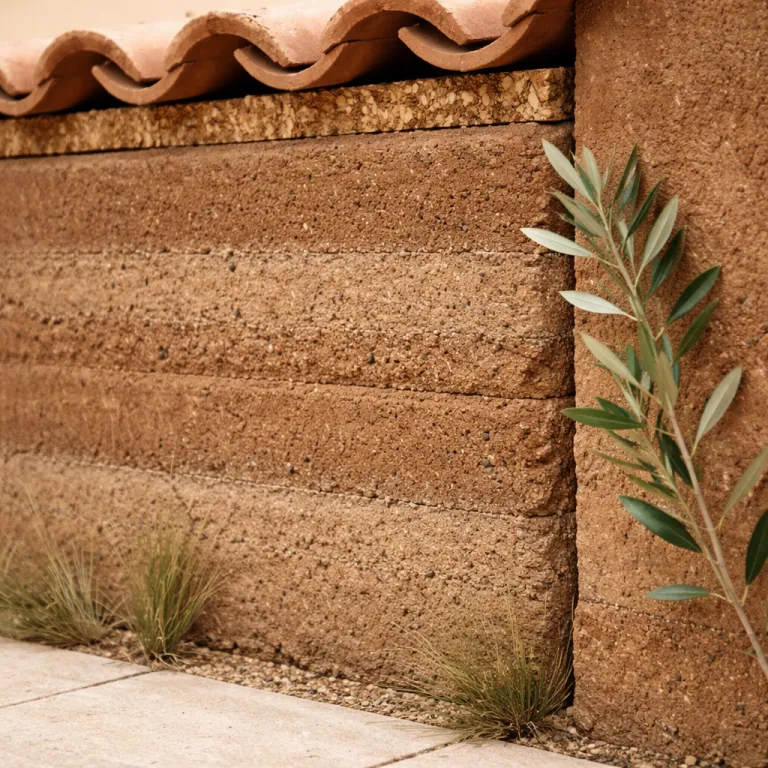
On the wilder Costa Vicentina, Vale Palheiro Earth Resort near Aljezur is the most radical of the three and arguably the most interesting for executives who care about where their money sleeps. Built with Taipa, the traditional rammed earth technique, this resort uses the soil under your feet as insulation, structure and aesthetic, turning every villa and casa into a quiet manifesto for low carbon construction. European building physics studies on rammed earth performance in Mediterranean climates show that thick earth walls can significantly reduce operational energy demand by leveraging thermal mass instead of mechanical cooling, a point echoed in Vale Palheiro’s architectural brief, which quantifies reduced cooling loads and lower peak energy use. Here, agrotourism is not a side activity but the operating model, with guests moving between rooms, orchards and the surrounding natural park in a way that makes the line between hotel and farm deliberately porous.
Ombria’s regenerative blueprint: when a golf resort earns the word sustainable
Ombria Resort sits inland from the crowded Algarve beaches, and that geography is the point. Instead of another strip side hotel with a token pool and a partial sea view, you arrive at a valley where the architecture follows the contours and the fairways thread between existing trees. The developers have worked with bioclimatic principles so that the rooms, villas and casas are oriented for natural light and ventilation, reducing the load on mechanical cooling systems that usually dominate luxury hotels in hot regions.
On paper, a golf resort claiming ecological regeneration sounds like a contradiction, especially in a region of Portugal where water is a political subject. Ombria’s credibility comes from the specifics that most marketing glosses over, such as the restoration of riparian habitats along roughly 1 800 metres of stream and the planting of about 700 native oaks to stabilise slopes and shade the course. These figures are reported in the Sustainable Golf project profile and echoed in Ombria’s own environmental statements and technical brief, which also outline irrigation efficiencies and reduced fertiliser use. When you walk from the main hotel to the pool or the outdoor pool terraces, you are moving through a landscape that has been stitched back together rather than flattened, and that matters if you care about more than the next round.
The energy systems are where Ombria steps beyond the average luxury hotel in Algarve Portugal and into genuinely new territory. The resort is pioneering near to surface geothermal energy in Portugal, using the stable temperatures underground to heat and cool the main hotel buildings and a cluster of villas and casas, which sharply reduces emissions compared with conventional air conditioning. Ombria’s technical brief describes a closed loop geothermal field that feeds high efficiency heat pumps, with installed capacity sized to cover a substantial share of the resort’s heating and cooling demand from renewable sources and to cut operational energy use per square metre. For guests, the experience is seamless, but for anyone booking luxury hotels in the Algarve with an eye on impact, this is the kind of detail that should sit alongside room size, pool design and beach distance when you filter the best options.
Ombria’s model also challenges the coastal monoculture that still defines many luxury hotels in Algarve, where the default is a beach resort with multiple pools, a spa and a golf course squeezed between other hotels. By going inland near Loulé, the developers tap into local villages, crafts and gastronomy in a way that feels more like a contemporary quinta than a sealed resort, even though the service standards match any five star property. In interviews about the project, Ombria’s team consistently frame the resort as a “low density inland community” rather than a standalone complex, and that positioning is visible in how the valley connects to surrounding settlements. If you are used to staying at places like Vila Vita Parc or Pine Cliffs on the coast, Ombria offers a complementary experience rather than a direct substitute, and that is precisely why it matters for the region’s long term mix.
Food and culture are part of this regenerative story, not an afterthought, and they connect Ombria to a wider shift in how travelers move through Algarve Portugal. Guests are encouraged to explore local villages, participate in eco tours and enjoy organic local cuisine, which turns the resort into a hub for the inland economy rather than a self contained island. When you later head east toward Olhão and walk through the fish market that anchors the region’s most authentic seafood culture, the contrast with more generic coastal hotels becomes obvious, and guides such as this analysis of where to eat on the eastern Algarve help you connect those dots.
Quinta Bohemia and Vale Palheiro: engineering, earth and the new rural luxury
Where Ombria works at the scale of a valley, Quinta Bohemia shows how a smaller property can turn engineering into a quiet form of luxury. The A plus energy efficiency rating here is not a marketing flourish but the result of a fully integrated system of solar panels, smart building controls and water management that keeps rooms cool and the swimming pool comfortable with far less energy. In a region where many hotels still rely on outdated systems, this level of technical discipline is what separates genuine sustainable luxury hotels from those that simply apply a green filter to their website. Quinta Bohemia’s owners have described the project in local media as “designed from day one for A+ certification,” a claim that aligns with Portugal’s requirement for high performance envelopes and on site renewables at that level and with the figures disclosed in the property’s official energy certificate.
Guests at Quinta Bohemia experience this engineering as comfort rather than constraint, which is exactly how it should be in the upper tier of luxury hotels Algarve. Rooms are generous, the main pool and outdoor pool areas are calm, and the surrounding gardens are run on permaculture principles that keep the soil alive and the air scented with herbs. The property’s permaculture gardens are not just decorative, because they supply the kitchen and create a direct line between the land and the plates that arrive at your table after a late flight from Lisbon or a morning meeting in Faro, while also reducing food miles and supporting a more circular on site food system.
Vale Palheiro Earth Resort, by contrast, is a statement in rammed earth that feels almost radical in the context of Portugal Algarve. Built using Taipa, the traditional technique where earth is compacted into thick walls, the villas and casas here hold cool air in summer and warmth in winter, reducing the need for mechanical systems that dominate most hotels. Research on rammed earth buildings in southern Europe highlights how this thermal mass can flatten temperature swings and cut peak cooling loads, which is exactly what Vale Palheiro’s design team set out to achieve and documents in its architectural brief through modelled energy savings and lower annual consumption. The resort’s agrotourism led operating model means that guests move between rooms, orchards and fields, treating the surrounding natural park as part of the property rather than a backdrop for marketing photos.
This is where the region’s rhetoric about slow travel finally meets a credible operating model, and it matters for business leisure travelers who want their extended stays to mean something. If you have read about the region’s quiet move toward more deliberate travel patterns, analyses such as this piece on the Algarve’s shift toward slow travel help frame what Vale Palheiro is doing on the ground. Here, the luxury is not just in the view from your villa or the design of the pool but in the chance to participate in harvesting, soil care and local food systems without sacrificing comfort.
Both Quinta Bohemia and Vale Palheiro also show how the traditional idea of a quinta in Algarve Portugal can evolve without losing its roots. Instead of a simple rural house, each hotel quinta becomes a node in a wider network of community based tourism, eco friendly accommodations and sustainable architecture that supports local economies. For travelers comparing luxury hotels and resorts across the region, these properties offer a different answer to the question of what the best hotel looks like when you care about both service and soil.
The contradiction: capital flows, coastal icons and how to book better
While Ombria, Quinta Bohemia and Vale Palheiro are building a new template, the wider Algarve story remains conflicted. The regional tourism board has positioned its current strategy around sustainable tourism and global competitiveness, yet the development pipeline in hubs like Vilamoura, Lagos and around Quinta do Lago is still dominated by conventional international brands. Many new hotels and resorts arriving under flags familiar from other parts of Portugal and Europe are repeating the same high density, high energy model with a beach, multiple pools and a spa, while adding only light green touches.
For business leisure travelers, this contradiction means you cannot assume that a five star label or a reference to a natural park equals a genuinely lower impact stay. Properties near Ria Formosa, for example, often trade heavily on the imagery of the lagoon and the formosa natural landscapes without changing how their rooms are cooled, how their pools are heated or how their kitchens source seafood. The same applies to coastal icons such as Vila Vita Parc or Pine Cliffs, where the experience is polished and the views are extraordinary, but the underlying construction and energy systems remain closer to the conventional luxury hotel model.
At the same time, even the most progressive projects carry trade offs that matter if you are serious about impact. Golf courses, however carefully irrigated, still require water and maintenance in a drought sensitive region, and rammed earth walls reduce operational energy but do not erase the embodied carbon of foundations, finishes and infrastructure. Recognising these limits does not undermine Ombria, Quinta Bohemia or Vale Palheiro; it simply places them on a realistic spectrum where better choices are possible even if perfect sustainability remains out of reach.
This is where your booking behaviour becomes a form of quiet pressure, especially if you travel frequently for work and extend trips into leisure. When you filter luxury hotels Algarve on a site like stay in Algarve, treat sustainability as a core criterion alongside beach access, pool design and room size, and apply the same scrutiny you would to Wi Fi speed or meeting room capacity. Ask every property a simple question before you check availability or accept special offers: which parts of your sustainability page are backed by actual construction choices, and which are still aspirations.
One practical test is to look for specifics that cannot be faked, such as references to bioclimatic architecture, Taipa construction, geothermal systems or A plus energy ratings that are verifiable. Another is to see whether the hotel or resort engages with local communities through eco tours, organic cuisine and partnerships that go beyond a single charity event, because community based tourism is one of the clearest markers of seriousness. If a property near Ria Formosa or within a natural park can explain how its pools, outdoor pool areas and gardens reduce water use and support biodiversity, you are likely looking at a hotel that understands sustainability as an operating model rather than a marketing filter.
Finally, remember that your choices extend beyond the Algarve and into the wider Atlantic world of Portuguese hospitality. If you are planning a multi stop itinerary that combines Algarve Portugal with the Azores, guides to elegant hotels in São Miguel can help you maintain the same standards across very different landscapes. The more consistently travelers reward properties that invest in real systems, from geothermal fields to permaculture gardens, the faster the region’s capital flows will shift from conventional builds toward the kind of luxury hotels that Ombria, Quinta Bohemia and Vale Palheiro are quietly proving possible.
How to read a sustainability page: a checklist for executive travelers
Executives extending a work trip into a long weekend in Algarve Portugal do not have time for greenwashing. You need a fast way to separate hotels that have changed their construction and operations from those that have simply added a sustainability tab to their website. The good news is that the three projects in this article give you a practical checklist you can apply in minutes before you make a booking.
Start with energy, because this is where the biggest impact and the clearest signals sit. Ombria’s use of near surface geothermal systems, Quinta Bohemia’s A plus rating with on site solar and Vale Palheiro’s Taipa walls all show up as specific, verifiable claims rather than vague references to efficiency. When a luxury hotel in Algarve mentions renewable energy, look for details about geothermal fields, solar arrays, smart building controls and how these systems actually affect rooms, pools and shared spaces. Where possible, check whether the property discloses the percentage of its annual energy demand covered by renewables or the installed capacity of its systems, because those numbers can be compared across hotels and against the benchmarks cited in technical briefs and energy certificates.
Water is the second filter, especially in a region where drought cycles are sharpening and golf courses, pools and lush gardens are under scrutiny. Serious properties will explain how they manage irrigation, how their swimming pools and outdoor pool areas are designed to minimise evaporation, and how native planting reduces the need for constant watering. Some resorts now publish figures on reduced potable water use per guest night or the share of treated water used for irrigation; when those metrics are available, they move sustainability claims from persuasive to measurable. If a resort near Ria Formosa or within a natural park cannot articulate its water strategy, you can safely assume that the marketing has moved faster than the engineering.
Construction materials and land use come next, and this is where Vale Palheiro’s Taipa and Ombria’s low density masterplan offer clear benchmarks. Look for mentions of local materials, rammed earth, timber from certified sources and bioclimatic architecture that responds to the Algarve climate rather than fighting it with oversized mechanical systems. When a hotel quinta or villa style resort in Portugal Algarve talks about blending into the landscape, ask whether that means actual earth walls and restored riparian corridors or simply earth toned paint and some olive trees. Independent assessments, such as environmental impact studies or building performance certificates, are useful here because they confirm that design intent has translated into measurable outcomes.
Finally, interrogate the social side of sustainability, because luxury hotels do not exist in a vacuum and your stay has ripple effects. Properties that encourage guests to explore local villages, join eco tours and enjoy organic local cuisine are usually more embedded in their communities than those that keep you inside the resort perimeter. As one of the core definitions in sustainable design reminds us, “What is bioclimatic architecture? Design that considers climate for energy efficiency. What is Taipa construction? Traditional rammed earth building technique. What is permaculture? Sustainable agriculture mimicking natural ecosystems.” When a hotel can answer those questions clearly and show how they apply on site, you are looking at a place where the sustainability page reflects the built reality.
Key figures behind the new sustainable luxury in the Algarve
- Ombria Resort covers 153 hectares of inland Algarve landscape near Loulé, a scale that allows for low density villas, casas and a golf course integrated with existing topography rather than imposed on it (data from the Sustainable Golf project profile for Ombria Resort and the resort’s technical documentation).
- The developers at Ombria have planted around 700 native oak trees across the resort, which stabilise slopes, provide shade and enhance biodiversity while also reshaping the visual identity of a typical golf resort (figure reported by Sustainable Golf and referenced in Ombria’s environmental communications and technical brief).
- Approximately 1 800 metres of riparian habitat have been restored within the Ombria valley, reconnecting waterways and creating corridors for wildlife in a region where many courses have historically canalised or buried streams (Sustainable Golf development data for Ombria Resort and associated ecological reports).
- Quinta Bohemia’s A plus energy efficiency rating places it at the top of Portugal’s building performance scale, which requires a combination of high insulation values, on site renewable generation and advanced control systems rather than isolated upgrades (based on Portuguese energy certification standards and the property’s published certificate detailing installed solar capacity and performance).
- Vale Palheiro Earth Resort’s use of Taipa construction aligns with research showing that rammed earth walls can significantly reduce operational energy demand in Mediterranean climates by leveraging thermal mass instead of mechanical cooling (supported by European building physics studies on rammed earth performance and cited in the resort’s architectural brief and energy modelling).