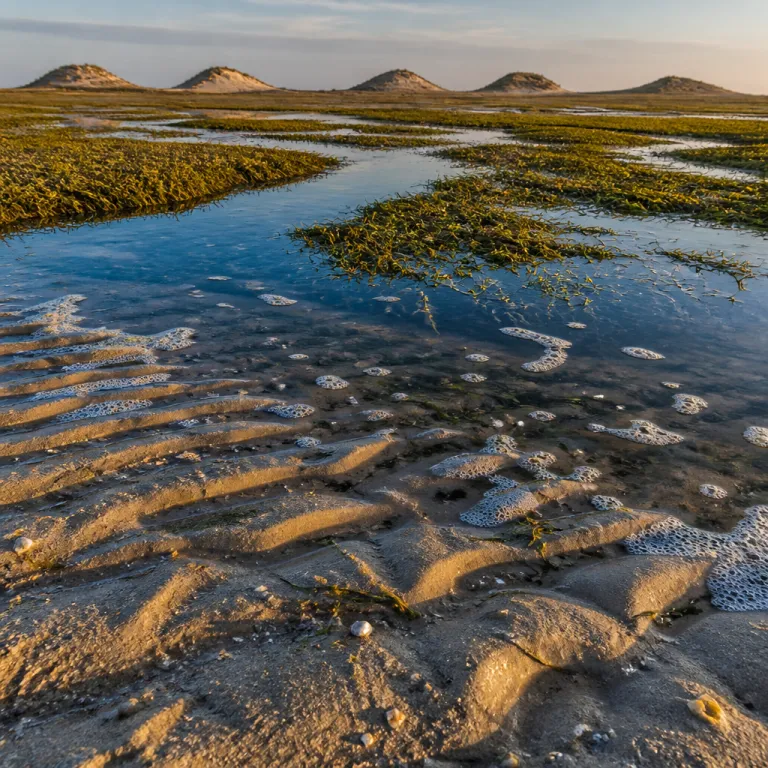
Ria Formosa Algarve as the anti-resort luxury
Ria Formosa Algarve is where the coast exhales and slows down. This lagoon system stretches for about 60 km along the eastern Algarve in Portugal, a protected area of sandbanks, salt marshes and quiet channels that feels a world away from the clifftop pools to the west. For families used to branded resorts, the ria and its formosa natural landscape offer a different kind of luxury, defined by silence, space and the rhythm of the tides.
The Ria Formosa Natural Park covers roughly 179 km², with five barrier islands sheltering lagoons and an estuary that constantly shift with wind and current. This natural park status keeps development low and protects sensitive habitats, so park visitors move mostly by public boat, small ferries or private charters rather than cars. It is a landscape where nature sets the timetable, and where the local population still depends on oysters, clams and traditional fishing rather than mass tourism.
Officially, the Ria Formosa Natural Park was created to preserve biodiversity, support traditional fishing and promote sustainable tourism in this unique coastal area. The governing body known as Ria Formosa Natural Park works with local communities, environmental organizations and government agencies to balance conservation with sustainable use. Their methods include conservation programs, sustainable fishing practices and eco-tourism initiatives supported by protected areas status and environmental monitoring.
For travelers, that balance translates into calm beaches, low rise villages and a sense that the Algarve can still feel raw and real. You come here not for a water park, but for a sandbar reached by a ten minute boat ride and a lunch of grilled fish at one of the simple restaurants cafes on the shore. It is well worth planning your hotel base around the tides and ferry timetables, because the most memorable beaches sit behind the barrier islands rather than beside a road.
Families who usually book large resorts near Costa Caparica or the central Algarve often find the ria more intimate and manageable. The shallow lagoons and estuary channels around Faro and Olhão create natural paddling pools, while the ocean facing beaches offer long walks and proper waves for older children. With the right hotel in Faro, Tavira or Olhão, you can move between islands and mainland year round, choosing each day between lagoon stillness and Atlantic energy.
The five barrier islands and how they actually feel
The five barrier islands of Ria Formosa Algarve form a shifting necklace of sand that defines this coast. Officially they are Barreta, Culatra, Armona, Tavira and Cabanas, each island with its own character, its own beaches and its own relationship with the sea. For a luxury traveler, the choice between these islands matters as much as the choice between hotels, because your daily rhythm will follow the first boat out and the last boat back.
Barreta is often called Ilha Deserta, a near empty island with no permanent local population, one restaurant and a boardwalk that leads to what is sometimes described as Europe’s southernmost point. The beach here feels almost endless, with dunes on one side and the lagoons of the ria on the other, and it suits couples or parents traveling with older children who enjoy long walks. A day on this island is well worth the short boat ride from Faro, especially if you value silence broken only by wind and bird species calling over the marshes.
Culatra and Farol sit on the same stretch of sand, but they feel like different worlds within the same species park of habitats. Culatra is a working fishing community with no cars, sandy lanes and small restaurants cafes serving oysters, clams and octopus landed that morning by local fishermen. Farol, at the western tip, is more of a low key holiday village with whitewashed cottages, a lighthouse and a beach that opens straight onto the Atlantic, ideal for families who like a little bustle with their nature.
Armona Island lies off Olhão and is the gentlest of the barrier islands for families with younger children. The lagoon side of Armona island offers shallow, warm water at low tide, with sandbanks that appear like temporary playgrounds, while the ocean side beach feels wilder but still manageable. Many premium travelers base themselves in Olhão, then use regular ferries or private boat taxis to hop to Armona island for unhurried days that start with markets and end with sunset over the ria.
Tavira Island and Cabanas, sometimes linked in guides as Tavira Cacela because of their proximity to Tavira and Cacela Velha, stretch eastwards into quieter territory. Tavira island has an 11 km beach that never feels crowded, even in peak season, and the ferry from Tavira town makes the crossing feel like a small adventure for children. Cabanas and nearby Cabanas Tavira offer a narrower strip of sand reached by tiny boats, with calm lagoon waters on one side and a view towards the white houses of Cacela Velha on the low cliffs.
These barrier islands are not places of poolside service and branded kids clubs. They are places where you carry your own parasol, where the luxury is space, and where the only schedule is the tide table pinned beside the ferry timetable. For travelers interested in the sustainable Algarve and low impact stays, this island chain shows what the region can be when conservation, local life and tourism share the same sandbar, a theme explored in depth in guides to the sustainable Algarve luxury projects inland.
Where to stay: Faro, Olhão or Tavira for Ria Formosa access
Choosing the right base for Ria Formosa Algarve is as strategic as choosing the right hotel. The three main gateways are Faro, Olhão and Tavira, each city offering a different balance of architecture, atmosphere and access to the islands and lagoons. For a premium family, the decision shapes everything from ferry queues to dinner options, so it is worth thinking beyond simple distance to the beach.
Faro is the capital of the Algarve and sits closest to the airport, which makes it ideal for shorter breaks or multi generational trips where grandparents appreciate minimal transfers. The old town is compact and walkable, with cobbled streets, a cathedral and views over the estuary of the ria, and from the marina you can board boats to Barreta island or join eco tours through the natural park. Luxury and premium hotels here tend to be urban in style, with rooftop pools and views over the wetlands, rather than direct beach access.
Olhão, often written as Faro Olhão in transport schedules, is the working fishing town that many insiders quietly prefer. The waterfront markets are some of the best in Portugal, with stalls piled high with fish, oysters, clams and seasonal produce that reflect the richness of the lagoons and estuary. From here, regular ferries fan out to Armona island and Culatra, and a growing number of small design forward guesthouses and premium apartments give families space to spread out between boat trips.
Tavira, further east, is the most graceful town on this stretch of the Algarve, with a river running through its center and a skyline of church towers. From the quayside, boats shuttle to Tavira island, while short drives lead to Cabanas Tavira and the viewpoints above Cacela Velha, where you look out over the barrier islands and the formosa natural mosaic of sand and water. Families who like to mix culture, slow evenings and beach days often find Tavira the most balanced base, especially when combined with day trips to Tavira Cacela and the quieter beaches near the Spanish border.
Wherever you stay, think about ferry access, parking and how your children handle waiting in the sun for a boat. Some premium properties now offer private boat transfers into the park, which can be well worth the extra cost for families traveling with grandparents or toddlers. For a broader view of family friendly luxury options across the region, including properties that pair well with a few days in the ria, consult this guide to family first luxury hotels in the Algarve.
Active families sometimes split their stay between the calm of Ria Formosa Algarve and the drama of the western cliffs. That combination works particularly well if you want to walk coastal trails such as the Seven Hanging Valleys with older children, then retreat to the sheltered lagoons and beaches of the ria afterwards. For practical advice on that hike, including packing lists and timing, see this detailed guide to the Seven Hanging Valleys Trail with kids.
Culture, heritage and the working life of the lagoon
Ria Formosa Algarve is not just a scenic park, it is a working landscape. The lagoons, salt pans and channels support a local population that still depends on fishing, shellfish harvesting and salt production, especially around Olhão and Tavira. Staying in this area means sharing space with people whose daily life follows the tides, not the resort entertainment schedule.
Traditional fishing culture remains visible in the small ports and on the islands, where octopus pots stack beside the quays and nets dry in the sun. Local fishermen head out before dawn in small boats, returning with catches that end up on the grills of restaurants cafes in Faro, Olhão and Tavira by lunchtime. When you order oysters, clams or razor shells, you are tasting the productivity of the estuary and the species park of habitats that the natural park status protects.
Salt pans near Olhão and Tavira shimmer beside the lagoons, their geometric shapes contrasting with the organic curves of the ria. These salt flats have long linked the Algarve to wider maritime trade routes, including historic connections with North Africa, and they still produce flor de sal that appears on the tables of high end restaurants across Portugal. Walking or cycling near these pans, you share paths with bird species such as flamingos, avocets and stilts that feed in the shallow water.
Cacela Velha, perched on a low headland east of Tavira, offers one of the most evocative views over Ria Formosa Algarve. From the church square, you look down over the barrier islands, the shifting sandbanks and the channels that separate Cabanas Tavira from the open sea, a view that captures both the beauty and fragility of this natural system. It is a place where you feel how thin the line is between land and water, and how carefully the protected areas must be managed.
Local authorities and communities work together to keep this balance between tourism and tradition. Increasing eco tourism, enhanced conservation efforts and research on climate change impacts all aim to secure the long term future of the park, its species and its cultural heritage. Visitors who respect local guidelines, use official ferries and support small family run businesses help ensure that the ria remains both formosa and lived in, rather than becoming a backdrop for mass tourism.
Practical guidance for families: boats, seasons and quiet luxury
Planning a family stay around Ria Formosa Algarve means thinking in terms of tides and boats rather than shuttle buses. Access to the islands is by official ferry services, small water taxis or private charters, with routes from Faro, Olhão, Tavira and Cabanas Tavira to the main beaches. Schedules change across the year, so it is wise to check times locally and allow for queues during busy periods.
For younger children, the lagoon side beaches of Armona island, Culatra and Cabanas offer the calmest waters and the easiest logistics. These areas have gentle slopes, warm shallows at low tide and enough restaurants cafes and kiosks to keep everyone fed without long walks, while still feeling far from any road. Older children and teenagers often prefer the ocean facing stretches of Tavira island, Barreta and the outer side of Armona, where waves are stronger and the sense of wild nature is more pronounced.
Ria Formosa Algarve works year round, but the feel of the park shifts with the seasons. Spring and autumn bring milder temperatures, fewer park visitors and excellent bird species watching, while summer offers warmer water and longer beach days but more crowded boats. Winter can be atmospheric, with clear light over the lagoons and estuary, though some island restaurants may close or reduce hours.
Whatever the season, pack for sun, wind and sand rather than for resort facilities. Wide brimmed hats, light layers, reef safe sunscreen and simple beach toys go a long way, and a small dry bag keeps phones safe on boat crossings, which can be choppy when the wind picks up. Many families also bring lightweight strollers that handle boardwalks and compact sand, especially on Tavira island and Armona island where distances between ferry and beach can feel longer in the heat.
Luxury here is measured in empty horizon lines, fresh seafood and the knowledge that you are staying in one of Portugal’s seven natural wonders. The context of this unique coastal ecosystem includes goals to protect natural habitats, support local livelihoods and promote environmental education, with the expected impact being long term preservation of both the ecosystem and its cultural heritage. For travelers used to the bustle of Costa Caparica or the central Algarve, a few days in the ria are well worth the adjustment to slower rhythms and quieter nights.
FAQ about Ria Formosa Algarve
What exactly is Ria Formosa and where is it in the Algarve ?
Ria Formosa is a coastal lagoon system in the eastern Algarve region of southern Portugal, stretching for about 60 km between Faro and Cacela Velha. It consists of barrier islands, sandbanks, salt marshes and tidal channels that form a protected estuary and wetland area. Much of this landscape is designated as Ria Formosa Natural Park, which helps control development and safeguard habitats.
What are the names of the five barrier islands in Ria Formosa ?
The five barrier islands that define the outer edge of Ria Formosa are Barreta, Culatra, Armona, Tavira and Cabanas. Each island has its own character, from the near empty sands of Barreta to the fishing communities on Culatra and the long family friendly beach on Tavira island. Access to these islands is by boat only, using official ferries, water taxis or private charters from towns such as Faro, Olhão and Tavira.
Is Ria Formosa suitable for families with children ?
Ria Formosa Algarve is very suitable for families, especially those who value calm water and car free environments. Lagoon side beaches on Armona island, Culatra and Cabanas Tavira offer shallow, warm water and gentle slopes, ideal for younger children. Parents should plan around ferry schedules and bring sun protection, but the combination of nature, space and simple restaurants on the sand works well for multi generational trips.
Can you stay overnight on the islands or only on the mainland ?
Accommodation on the barrier islands is limited and mostly in small village houses or simple guest rooms, with no large resorts or major hotels. Most luxury and premium travelers choose to stay in mainland towns such as Faro, Olhão or Tavira, then visit the islands by boat during the day. This approach offers better access to services and dining while still keeping you close to the lagoons, beaches and natural park.
Is Ria Formosa good for bird watching and nature activities ?
Ria Formosa is widely regarded as one of the best places in Portugal for observing diverse bird species, especially during migration periods. The mix of lagoons, salt pans and marshes attracts flamingos, waders and many other species, and guided boat or walking tours help visitors explore without disturbing sensitive areas. Nature focused activities such as kayaking, shellfish harvesting experiences and educational walks are increasingly available, reflecting the park’s emphasis on eco tourism and environmental education.
References
Instituto da Conservação da Natureza e das Florestas (ICNF)
Algarve Tourism Board
Ria Formosa Natural Park official information materials